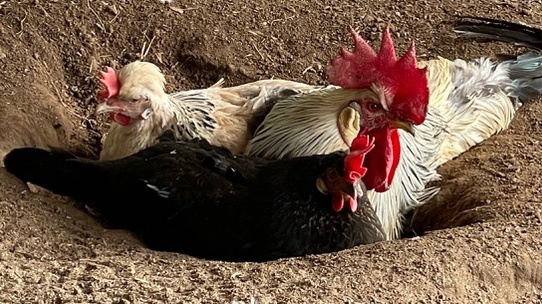
Right now, we have two roosters. We only need one, but I can’t seem to let either of them go. Sven has been a sweet rooster, with no aggression toward me, and he seems to take good care of the hens. Baby Roo is a nearly 1-year-old, equally sweet rooster who has all the urges you would expect from a youngster. This situation results in frequent “arguments” between the two roosters. For the most part, the hens don’t seem to be too terribly interested in getting involved. They might scatter when a skirmish starts, but then they quickly return to what they were doing. I can’t help but wonder if there would be less chicken drama if the “ladies” told the two gentlemen to “just get along.”
These chicken skirmishes come to mind when I see some of my leadership teams engage in conflict. Or rather, not engage. Sometimes, the leaders who are not involved in the conflict will simply watch, not wanting to be dragged in. In some cases, they put their head down, and other times, they watch the argument but don’t provide any assistance in helping the two resolve their conflict.
My assessment is these teams aren’t yet healthy enough to look at the conflict, and the people involved, and really think about what’s best for the company as a whole. Instead, they keep their distance, trying to make sure they aren’t caught in the crosshairs. In these cases, the conflict tends to go on for a long time, impacting the growth and profitability of the company.
Fortunately, I do have some teams that approach this type of conflict very differently. They see the tension between two people, recognize the importance of resolving it, and hold space for the two to work out their disagreement. These team members view healthy conflict as critical to the long-term success of the team and the organization.
I recall an EOS implementation in which one of my leadership teams had two people who were at odds with each other. The conflict didn’t rear its head every session, but when it did, the resulting tension was high. The room filled with strong emotions, unstated resentment, and a lack of understanding.
About a year and a half into their EOS journey, things started to shift. The first thing I noticed was personal growth in both leaders. I could see them becoming more open with the team and willing to accept feedback. This shift affected how they showed up and interacted with the team. During a recent quarterly meeting, the underlying tension bubbled up. The resentment, anger, and frustration were real, but this time, both leaders held it together long enough to express how they truly felt. The conflict ran deeper than the surface, and for once, their emotions came out in a healthy way.
What impressed me even more was the way the rest of the leadership team behaved during this conflict. Every other member of the leadership team stayed engaged in the conversation. They weren’t picking sides, but rather they were listening for what wasn’t being said, explaining some of the frustrations from their own perspectives, and providing feedback for both team members. This active participation from all members resulted in the team being able to collectively resolve the tension once and for all. The reward for this effort? In the six months following the resolution of the tension, I personally witnessed a revenue and profitability increase of over 25%.
When you look at the dynamics in your leadership team, do you sense tension boiling under the surface? Are you hoping it will magically dissipate, or are you creating the space to resolve conflict?
My challenge to you is not to act like a bunch of chickens, keeping your head down, hoping not to be dragged into the conflict. Instead, work toward a resolution. You may not be directly involved in the conflict, but it can still affect you; the growth of the leadership team and the company will stall until these tensions are resolved.