We Don’t Eat Our Chickens!

We Don’t Eat Our Chickens!

The decision to get chickens was totally mine. I’d been thinking about it for a while, and then in March 2020, when the world shut down, I realized I finally had time to start building my chicken coop. My husband was a good sport and supported me during the process, including allowing me to take over the garage while building the coop, assembling and leading the transport crew (it took four men to lift the coop into a trailer and move it to its final destination) and leveling the coop. Once I realized I would need some sort of fence to protect the chickens, he made multiple trips to Portland to pick up a dog run that I found on Craig’s List. And he spent a lot of energy digging below grade to ensure that no rodents could dig under the fence and get to our chickens.

Even with all that help, he still viewed this as my undertaking. It was my responsibility to manage the day-to-day aspects of having chickens. It turned out that raising chickens has a bit of a steep learning curve, and multiple times he suggested we should just get rid of the chickens and go back to buying eggs at the store.

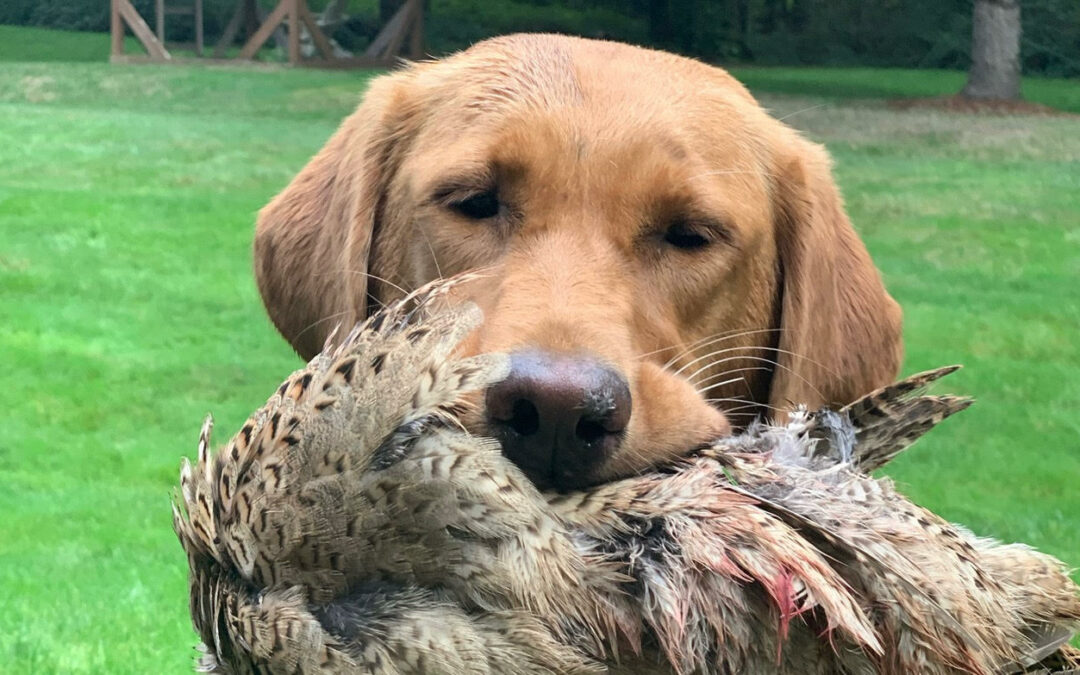
About six months into my quest to become a chicken mama, JacX killed our first chicken. I wrote about it in this article. To briefly summarize, we had a hen outside of our coop. I thought it was one of my free-range hens coming back because she heard the call of our newly adopted rooster. It wasn’t. Instead, it was one of the hens that had somehow escaped from the coop/run. JacX was in full retriever mode and chased that chicken down and brought her back to her dad.

Both Mike and I were very distraught as we watched this whole chase unfold. But it was at that moment that I realized my husband and I had very different ideas about how to handle a dead chicken.

I’ll never forget Mike’s reaction. He was holding the dead chicken, head down, and started walking back to the house. I asked him where he was going and he said he was going to make chicken dinner. I was appalled! I exclaimed, “We Don’t Eat Our Chickens!” He looked shocked. It was a chicken, freshly killed, and the right thing to do would be to eat it.

We still don’t agree on this point. But he has respected my wishes (at least I think he has) and has not eaten any of our chickens. Instead, he realized that if we’re going to go to all this effort to feed these chickens, perhaps he should raise some fryers.

Once he got this idea in his head and we had a shared vision, he became more involved in caring for the chickens. This has made the whole experience more enjoyable, especially with his great ideas on how to improve their living quarters and their overall enjoyment.

As often happens, this Chicken Mama moment sparked a realization about the wider world. When I reflect on my EOS clients, the most common reason they cite for wanting to start implementing EOS is that they don’t believe everyone in their organization is on the same page. The owner, president, or CEO feels that the leadership team is moving in slightly different directions (some more than others), and this is keeping them from achieving what they know they are capable of achieving.

Having a shared vision means that everyone sees the vision and rows together toward that vision. When the leadership team establishes a three-year picture of what the organization looks like, the intent is to create a vision that not only the entire leadership team but all the employees see and share.

Recently, I was in session with a client, and two owners started to talk about their revenue target. They both had similar revenue numbers in mind, but as they started to talk through it, they realized that they were talking about two very different targets: one was recurring and the other was total. Instead of saying, “We are close enough,” they kept discussing until they were completely on the same page. Why did that matter? Because if they were aiming for different revenue targets (or types of revenue), the vision would be different, and ultimately their decision making would be different.

Take a look at your organization. Do you see everyone moving together toward a shared vision? Or do you see people kinda going along to get along? Some leaders have a vision and pull everyone else along to achieve that vision. Yes, that can be done. But, from an outside perspective, that seems exhausting. Wouldn’t it be more fun to have every one of your employees working alongside you to achieve that vision?

One of the frustrations that business owners often experience is that no one in the organization seems to want it as much as they do. But how can someone want something they can’t see? As a leader, have you clearly communicated your vision for the organization and allowed your employees to ask questions and even challenge that vision? This may be a little scary, but those questions and challenges can help define or refine that vision into something everyone wants to achieve.

If you are exhausted from trying to pull your employees along toward achieving your vision, slow down and give me a call. I promise you there is a better way.

    My Price for Not Having a Process

    My Price for Not Having a Process

    Those of you who know me know how much I love process.  I graduated from college with a degree in chemical engineering and took off to become a process engineer.  I don’t know why, but my brain likes the order that comes from having a process.  However, in college, I also earned the nickname “the creative chemical engineer.”  So, while I do like process, I also like the freedom of being able to create.  And I don’t think those two things are diametrically opposed.

    When I decided to become a chicken mama, I wasn’t sure what I was doing.  Honestly, I was “winging” it.  I read some books, talked to some people and ultimately decided that I had enough information to jump in with both feet.

    For the most part, I got the gathering of eggs and the feeding of chickens.  But it soon became clear that I didn’t know how to manage an unruly rooster, nor did I understand the nuances around cleaning the coop.  Dealing with Oden, my former mean rooster, gave me confidence in handling roosters and unruly chickens in general.  The coop-cleaning process, however, took me a while to figure out.

    The great thing about chicken poop is that as it breaks down, it generates heat.  So, every week, I rake the coop and add wood shavings.  The extra bedding and the decomposing poop create a warm environment for the chickens in the winter months.  In the summer, I completely empty the coop, and then refill it with fresh shavings and repeat the process.  Then, in the fall, I put this bedding in my garden as fertilizer.  (Oh, the circle of life!)

    Well, one day, I went up for my weekly coop cleaning, opened the large side door and out flew a hen. Fortunately, my two dogs were with me, and they took off to catch my hen.  Unfortunately, they brought me back a dead hen.  (To date, my retrievers are 5 for 5 on catching my escaped hens, and the hens are 0 for 5 for surviving.)

    This unfortunate event made me modify my process to ensure that all chickens are out of the coop and the chicken door is down prior to opening the large side door.

    Other aspects of my chicken care process include when to fill the food and water, how often to apply diatomaceous earth and the frequency of changing out the nesting boxes.  All of this is designed to make things easier for me when time is tight (typically in the mornings) and ensure the chickens remain healthy and safe.

    I am one of those people who applies process to many aspects of my life, from how I make my spicy margaritas to the way I do laundry to how I prepare for client meetings.  What I get from these processes is consistency and simplicity.  And if I don’t get the desired outcome, I can look at what part of the process needs to change in order improve the results.

    I know many people who find process too confining, or too rigid, or they say it stifles their creativity. And while you could make that argument about process in your personal life, if you want to delegate aspects of your job to others while ensuring they are done the right way, I’d ask you to reconsider.

    In EOS, we teach that every business has a core set of processes that make up your operating system. Typically, you will have an HR process, a sales process, a marketing process, a few operational processes, a finance process and a customer service process.  While it varies for every business, these core processes define how the business is run.  The benefit of having these processes is that it makes the output more consistent, which makes it easier to manage, which makes it easier to scale, which ultimately makes the business more profitable.

    In the early days of a business, it is easy to make sure everyone follows the processes because, chances are, each process is handled by one person.  But as the business grows, more people become involved in each process, and inconsistencies creep in. But if you want to continue to grow and be profitable, you need to maintain consistency in your processes.

    Recently, I was talking to a business owner who sits in the Sales seat on the accountability chart.  He was talking about hiring another salesperson, so I asked about his sales process.  “Oh, you can’t document my sales process,” he said. “I go by gut feel and there is no way to document that.”  This is a common answer, and not just from salespeople.  But keep in mind that having a process to follow when selling your product or service doesn’t take away the “feel” that a seasoned salesperson uses to move the prospect toward the close.  What it does do is provide consistency around the customer experience, which I’d argue improves the outcome of the process (hint, more sales).

    In an entrepreneurial company, the goal is to find a process that ensures the most important things in the business are done the right and best way, then allow your employees to fill in the remaining details with their flair.

    Here is an example that you can probably relate to: a recipe for making chocolate chip cookies.  Picture an old-school recipe card, a 3×5 index card (before they were moved online).  One side lists the ingredients, and on the other side are the steps to follow. The first step is typically: cream butter and sugar until thoroughly mixed.  It doesn’t say how to cream them or how to know if they are thoroughly mixed. This understanding comes with baking experience.  But, if you follow the steps on the recipe and have enough understanding of how to bake, you will make yummy chocolate chip cookies.  The recipe provides a set of high-level steps to follow without stifling anyone’s creative flair (such as adding butterscotch chips).

    Documenting your processes isn’t enough: you also need to ensure they are followed and then measured to see if you are getting the desired results.  If you aren’t, then what is the point in having a process?  Process for the sake of process is a motivation killer.  Process with the goal of ensuring consistency of outcome while freeing up the individual to “humanize” the process is a motivation booster.

    Ready to tackle the processes in your business? A few steps will get you started. As a leadership team, first agree on the most important things that need to be done the right and best way. Then, assign an owner to each of those processes and have that person document the process.  Once that’s done, the leadership team should review what’s been documented and agree that it is the right process with the right level of detail.  The next step is to train every single person who touches that process, then begin to measure the results of that process.

    This project won’t be done overnight, but over time it will begin to build in consistency within your organization, which will lead to higher productivity, higher morale and increased profitability.  Doesn’t that sound like a great outcome to a process?

      What Do You Mean You Don’t Know?

      What Do You Mean You Don’t Know?

      An Interesting Response.

      When I was first thinking about getting chickens, I would ask other chicken owners how many chickens they had. Strangely, the answer was almost always a pause and then, “I’m not sure. Let me think about that.” I found that response baffling. How do you not know how many chickens you have?

      I followed that question with, “How many eggs do you get a day?” And again, the answer was less than concrete. They’d say, “It depends.”

      I remember thinking that both of these responses were confusing.

      Since these questions weren’t getting me the answers I wanted, I eventually realized that the correct question is, “How many eggs a day do I want?” And from there, I could determine how many chickens I would need to reach that target, then choose the coop size that matched the number of chickens I needed.

      So, I figured four to six eggs per day would be adequate. But, as I have since learned, the number of eggs you get each day depends on many factors, including the amount of sunlight per day, the age of the chickens and whether they are broody. In short, the math rarely works out as simply as four hens equal four eggs.

      Even so, my hens (whether they know it or not) have a number they must reach to make sure they are “carrying their weight,” so to speak. In the summer, a hen should be producing an egg every 25 hours, unless of course she decides to go broody (because once she is sitting on a clutch of eggs, she will stop laying and won’t start again until her peeps are ready to be left on their own).

      I use the number of eggs I collect each day as an indicator of the health of my flock. If egg production goes down, that tells me I need to do some investigation into the reason. Is one of the hens sick? Are they getting enough food and water? Did a hen meet one of my overly friendly dogs?

      Having a performance indicator like this is important. When you look at your “flock” of employees, how do you evaluate how they are performing? Do all of your employees know what is expected of them every day? Do they know whether they won the day or the week? Or do you let them go home and wonder how they are performing?

      I firmly believe that no employee comes to work and wants to do a bad job. But if we have no idea what a good job looks like, how can we ensure they are doing what is expected?

      In Patrick Lencioni’s book The Truth About Employee Engagement, originally titled The Three Signs of a Miserable Job, he says the three factors that make a job miserable are anonymity, irrelevance and what he calls immeasurement, or the employee’s inability to measure his or her own job performance.

      If you want your employees to be fulfilled in their work, they first need someone in authority to know, understand and appreciate what they bring to the organization. They also need to know that their job matters. This seems so basic, but if it isn’t articulated to employees over time, they will not thrive in your organization. And finally, employees need to be able to gauge their own performance and contribution to the work of the company.

      In the world of EOS, we teach our clients how to keep their employees engaged by addressing each of these factors. One way we do that is to encourage quarterly conversations with each employee about where they are excelling and where they could use some improvement. These conversations should be relaxed, undocumented and two-way. This practice shows the employee that you value them and the impact they are having on the organization.

      The other way EOS companies keep their employees engaged is by ensuring that every employee has at least one “measurable,” something quantifiable that the employee is responsible for keeping on track every week. This measurable is activity-based and should be meaningful to both the employee and the company. For individuals in a sales position, finding something to measure is pretty easy. How many sales calls did you make? How many demos did you complete?

      But as you dig further into the organization, finding appropriate measurables may require more thought. I recommend starting with what someone in each role is accountable for, then identifying measurables that are linked to the outcomes for that role.

      Imagine how an employee feels going home at the end of the week knowing she had a great week. She hit her numbers and as a result is helping the company hit its numbers.

      Companies are successful not because of the owner or leadership team; companies are successful because all the employees are rowing in the same direction, and together they are gaining traction toward achieving a shared vision.

      In the past few years, much has been written about the shortage of workers and the difficulty in finding and retaining good employees. If your company intentionally addresses the three signs of a miserable job, what kind of an impact would it have on your workforce? Your employees would come to work knowing they are valued, that their work matters and that they are succeeding. This could easily translate into higher retention and a happier workforce, which could in turn improve productivity. And a company that has happy employees will have an easier time attracting more of the right type of employee.

      It is that easy – but it requires a commitment.

      If you are committed to getting each member of your flock engaged and working toward achieving your vision, but you need some help getting started, send me an email. Your flock will reward you for it!

        Hei Hei the Chicken Terrorist

        Hei Hei the Chicken Terrorist

        Have you ever worked with someone who was a real suck-up when the boss was around, but after she disappeared, he would be mean and nasty to the rest of the team? It’s like working with two different people, neither of them particularly enjoyable.

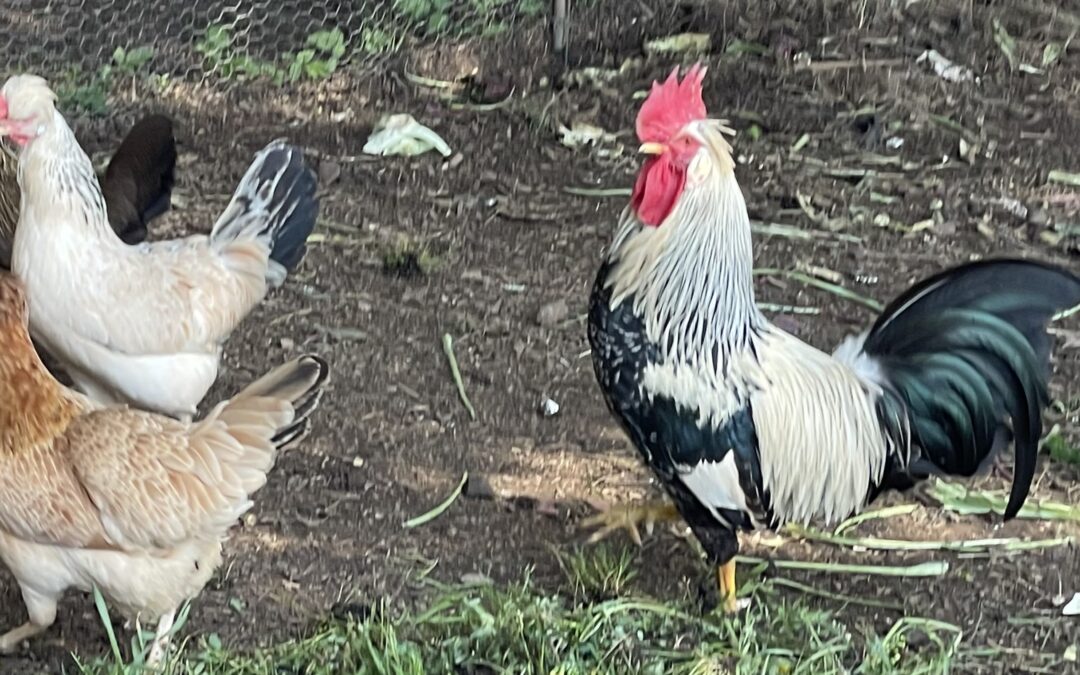
        It appears I had this situation with my rooster, Hei Hei. After my experience with Oden, my late mean rooster, I thought Hei Hei was a great rooster. I was able to enter the coop without fear of him flogging me, I could tend to the food and water without worrying about his whereabouts, and when I did approach him, he would run away, not fly towards me like Oden did.

        A month or so ago, Mike started suggesting that we should get rid of Hei Hei. We had plenty of peeps, so his “services” weren’t needed any longer, and the 4:30 AM crowing was getting old. But, I kept telling Mike, “He is such a nice rooster.”

        A few weeks ago, I went up to the coop and found that one of my May peeps was walking like a penguin. I asked my chicken whisperer if she could check him out. Her inspection revealed that the peep was severely underweight and malnourished. What happened to him, you ask? Well, Hei Hei realized he had some competition from an up-and-coming rooster and kept him from eating and drinking. Apparently when a rooster walks like a penguin, he is showing submission to another chicken, in this case our rooster.

        We separated “Penguin” from the flock and started adding apple cider vinegar to his water and feeding infant vitamins to him. He has gained the weight back, but he is still walking like a penguin.

        This incident made me turn my attention to Hei Hei, and I realized how aggressive he was being with the hens. My focus had been on how he was treating me, not on how he was treating the rest of the flock. So, I agreed with Mike that we could remove him from the flock.

        We had four choices for removing him:

        1. Kill him
        2. Kill him and eat him (not a viable option since I don’t eat our chickens)
        3. Take him to the feed store where he would be rehomed (I think that is code for someone else eating him)
        4. Take him to the fowl auction.

        Read below to see which option we chose.

        Do you have any Hei Heis in your organization? Employees that you know aren’t treating other employees well but are nice to you or giving you as an owner or manager what you want? Have you considered the impact these people can have on productivity, morale and employee engagement within your organization?

        I was recently reading about the Welch Matrix, designed by Jack Welch, former CEO of General Electric. He classified his team members into categories based on performance and values match.

        • Stars: High performance and high values match (In EOS language, these are Right People in the Right Seat).
        • Terrorists: High performance and low values match.
        • Potential Stars: Low performance and high values match.
        • Deadwood: Low performance and low values match.

        If you don’t address your low-values-match employees, you risk losing your stars or your potential stars. Worse yet, your stars could exit your organization, leaving your terrorists and deadwood to train the potential stars. Will those potential stars become stars or terrorists?

        Be courageous when you see someone who doesn’t exhibit your core values. They can erode your organization’s culture in ways you can’t even imagine. Yes, addressing the issue can be scary, and it could impact your organization, but it won’t be as bad as you imagine. Just yesterday, a president of a company shared that she had known for two years she had a wrong person in her organization but was hesitant to remove them, due to a lack of technical expertise internally. She finally reached the point where she couldn’t wait any longer. Her thought after she addressed the issue? “I wish I had done this two years ago.”

        Once the problem with Hei Hei was pointed out, I did act, but unfortunately, I think the damage to Penguin is permanent. What kind of damage are your employees suffering from with your “Hei Hei,” and will they be able to recover once you address the issue?

        If you need help deciding how to handle your Hei Hei, or if you want to know how much we auctioned off Hei Hei for, send me an email. The situation won’t go away until you take decisive action.

        Why Don’t My Chickens Like Me?

        Why Don’t My Chickens Like Me?

        If you have been reading my articles, you probably know that my beloved chickens are afraid of me. And they have been from Day 1.

        The first day I brought my chickens home, they flew the coop. I guess I should have known that since they are birds, they can fly. I’m a little embarrassed to share that I went up to the coop during the first few days and tried to get them to come to me. I sat down on the grass not far from the coop with little pieces of pancake and said, “Here, little chicky” in my softest, sweetest voice. Well, it didn’t work. They stayed away from me.

        Knowing what a great person I am, I figured it was their issue and not mine. Chickens just don’t like humans. Period.

        I held this belief for quite a while.

        Then I met the Chicken Whisperer next door. She takes her chickens for walks down the driveway, and when she enters their pen, they have no issues with her being there. She told me she starts by holding them when they are just a few days old, and they get used to her. I can tell you that isn’t going to happen here, where I have a mama hen who will attack anyone who gets near her peeps. Let’s just say the Chicken Whisperer’s peep-raising experience was different from mine. So again, not my issue.

        But when I started to have trouble with Oden, my mean rooster, I did some research on how to “tame” a rooster. I came across a YouTube video of a woman walking around her pen, surrounded by chickens. None of them were running away and squawking bloody murder. This woman just reached down and picked up her rooster. I can’t say that he enjoyed it, but he didn’t flog her and run away.

        The final realization came at Christmas, when my dear friend Vicky gave me a chicken hat as a gift. She was so excited to give it to me, and I stared at her, confused. Why would anyone think of putting a hat on a chicken? She couldn’t believe that I hadn’t seen any of this on YouTube. I checked it out and sure enough, people knit hats to put on chickens. And guess what? Those chickens aren’t afraid of their owners.

        I did some soul searching and realized I might have to accept some of the responsibility for the fact that my chickens don’t like me. First, I have dogs, and my dogs love to chase the chickens and even retrieve them if they get out. Second, chickens don’t like sudden movements. So, when I enter the coop moving pretty fast or I dump a load of weeds into the pen, it startles them.

        This led me to consider what I could do to change my relationship with my chickens. The first change I’ve made is to have the dogs SIT-STAY away from the pen when I enter. And I move much more slowly when I’m around the flock. I also bribe them with mealworms because chickens LOVE mealworms.

        I’m hopeful that these changes will soon make a difference. More importantly, the chicken situation got me thinking: How many of us tell a story about our relationships with other people and how the relationship isn’t good because of the other person? One of the harder parts of being an adult is having the insight to examine the role I play in my less healthy relationships. It is so much easier to blame others than to consider how I could play my part better. Do I have biases that keep me from hearing the other person? Is my body language sending a message that I’m defensive? Am I talking over them? Am I taking the time to really hear the meaning behind their words?

        EOS is designed to help leadership teams get strong in three key areas: Vision, Traction and Healthy. Vision means everyone on the leadership team is crystal clear on where the business is going and how it’s going to get there. Traction means executing on that vision with discipline and accountability. And Healthy means transforming the leadership team into a cohesive, fun-loving group of people who like working together.

        Which part is the hardest? Healthy. I coach my clients to be open and honest. Being open means you hear what other people are saying, instead of just waiting for them to stop talking so you can start talking. Being honest means if there is something in your head, get it out. Just say it.

        If you want your business to achieve your goals, the leadership team and the rest of the organization needs to become Healthy. A strong leadership team working together can achieve anything. And getting strong starts with being healthy.

        Here’s my challenge to you: Take a look at one relationship in your life that isn’t where you would like it to be. Ask yourself, What are you doing to contribute to its current state, and what are you going to do about it?

        Not sure? I’m here to talk it through with you.