The Painful Truth

The Painful Truth

I’m hoping enough time has passed that I can tell this story without incriminating myself.

A few years ago, I inherited a beautifully built chicken coop and three very friendly hens from a friend in my network. This coop was small, just four feet by eight feet, but it was fully enclosed. The hens were raised by people who loved them, and they were used to free-ranging in their backyard in Portland. To get the chicken coop home, we had to disassemble it and load it onto a trailer. When we got home, we had the three hens join our existing flock until we could reassemble the coop.

Once the coop was prepped and ready for the hens, we moved them into their home. Compared to the space we had just moved them from, it seemed like such a small place for these hens to spend all of their waking time. However, I have two Labrador retrievers who are trained bird dogs. So I was hesitant to let these hens free range. But one Saturday afternoon, the urge to give them some extra space overtook me. The dogs had just gotten back from a long hike and were sleeping by the house. I decided to open the coop door and let the hens out to roam.

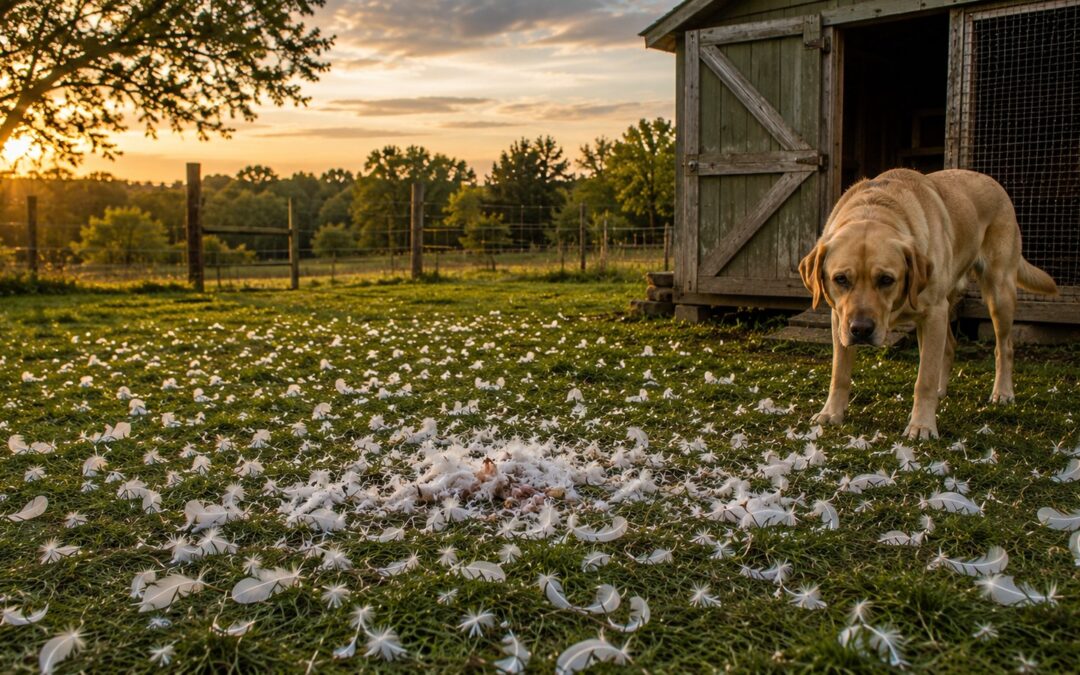
Fast forward about three hours, and I can’t find Marlee, my older retriever. He wasn’t one to run off, but he wasn’t in the house, and I couldn’t seem to locate him outside. So, I took a walk up the path to the garden and the chicken coop. And to my horror, there were chicken feathers everywhere, and Marlee was in the process of tearing one of the hens apart.

I was so upset with Marlee, but even more so with myself. While I knew that Marlee loved to chase birds, including chickens, I had honestly believed he was too tired to wander up to the front field.

What did I learn from this experience? First, don’t expect someone to behave differently from who they are hard-wired to be. Marlee is a retriever, and no matter how tired I thought he was, or how much I wanted him to be different, he is who he is.

Second, think twice before you decide to “save” someone, or something, from what you perceive to be a problem. Those hens might have been perfectly content in their little area, safe from all types of predators, and could have lived their lives peacefully. I wanted them to have more space because, if I’m honest, it made me feel better.

As hard as it is to admit, at the core of this entire decision was putting me and my desires at the center and not putting the hens first.

That coop is a painful reminder for me to make sure I’m looking at situations with a view to what is best for all parties, not just from my own perspective. Our perceptions can seem like realities, and it is important for us to question those perceptions to ensure we are seeing the true situation.

In a call with a client a few weeks ago, we were talking through a challenging employee situation. She just couldn’t understand why the employee was behaving irrationally, and she felt the best path was to have a conversation with this employee and explain where she perceived the logic to be missing. My response was that she was trying to have a logical conversation with an irrational person. That will never work. I suggested instead that she try to reflect on why the person was behaving that way. This doesn’t mean necessarily agreeing with the employee, but without understanding their perspective, you may not be equipped to move the situation toward resolution.

What about you? Are you slowing down enough to look at situations from a different angle, or are you relying on your perspective to be “the right one”? Or on a more personal level, are you trying to get someone in your life to be the person you want them to be rather than accepting who they are and appreciating their strengths?

If you find yourself in a difficult situation and could use a different perspective, please reach out to me. I’m confident a five-minute conversation could help you see the situation from a different angle and allow you to move toward a successful resolution while avoiding some potentially damaging collateral.


You can’t potty train a chicken

You can’t potty train a chicken

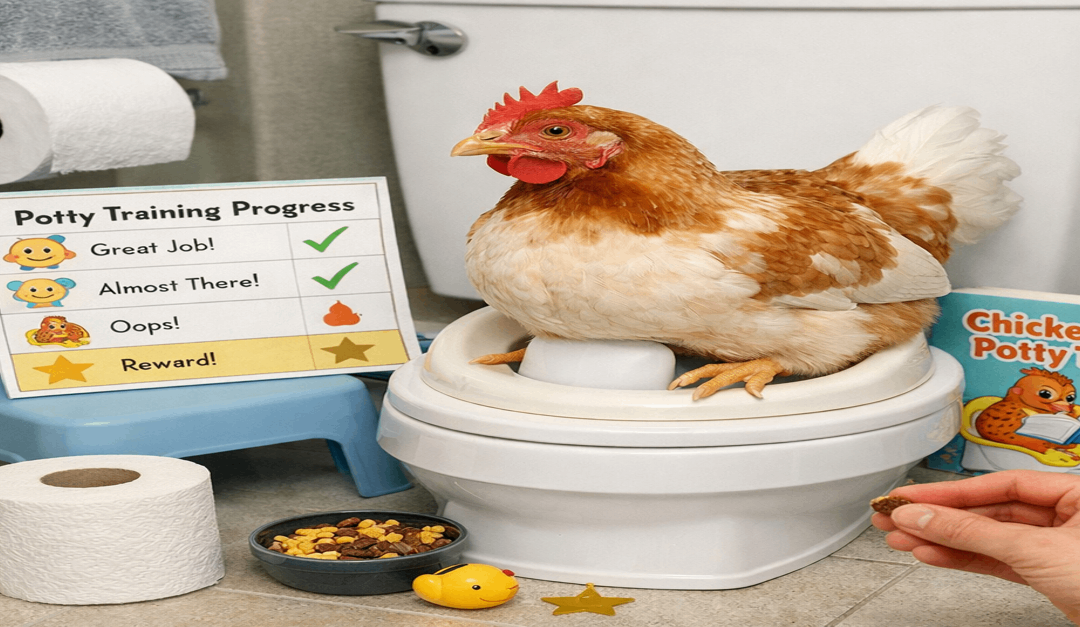
“You can’t potty train a chicken.”

I looked at my friend and fellow chicken owner and questioned what made her say that to me. It was such an obvious fact.

To be honest, I have been a bit frustrated with my chickens as of late. Yes, they are laying eggs, but I hate how mean some of them are to the chickens on the lower end of the pecking order. And I can’t tell you how many times I have had to kick Sally out of the nesting box at night, reminding her that she is a chicken and chickens roost at night. Only to find her back at it, sleeping (and pooping) in the nesting box again.

Was my friend trying to tell me, in a subtle way, that my frustrations are unfounded? Was this another soul-searching chicken mama moment? Why can’t I just accept that my chickens are only behaving in their natural way?

Pondering this, I started to expand those thoughts to the people around me. Once again I was confronted with an uncomfortable reality. At some point, I will have to accept people as they are and lean into their strengths.

How about you? Do you have some people in your business (or your life) that you wish were a little different? Maybe you have someone who is a great worker, but she focuses so intently on the task at hand that she can’t multitask (hot tip: no one can; multitasking isn’t a thing). Or maybe you have a great manager the employees love, but you don’t think she’s pushing her team hard enough.

The hard reality is that none of us is perfect (shocking, I know). And we are all hard-wired to approach our work in a certain way. When we get people in the right seat, so they can do work they love while using their natural skills to do that work, that is when organizations really start to hum.

I was speaking with a business owner a few weeks ago, and she told me orders were down. She suspected the cause was a slow response time on incoming inquiries. When I asked her who was accountable for addressing those inquiries, she shared that it was her estimating person. She was so positive about this employee: She was hard-working, the customers loved her, and she had incredible attention to detail. However, she also said this employee could only focus on one task at a time and didn’t move on until that task was complete. This strength was keeping her from responding to incoming inquiries as they came in, as she couldn’t bounce from working on estimates to responding to inquiries – she wasn’t hard-wired that way.

So, the owner took a step back and reviewed the steps of her estimating process and the owners for each step. She reworked the process based on the skills of each team member. Once she made these changes, response times started to improve again and orders started coming in.

Here is my question to you: Are you trying to potty train your chickens? Are you expecting your employees to behave differently than they are hard-wired to? Is there an opportunity to shift the work around so your employees are doing the work they love in a manner that is congruent with their strengths?

If you can see the problem but you aren’t sure about the solution, reach out to me. Together, we can work through the issue while helping you get clarity on what needs to change and how to go about making that change.


Is it a disaster, or just business?

Is it a disaster, or just business?

Being a chicken mama during the winter months is not glamorous. It is all work and no, or minimal, egg production. I know egg production always drops this time of year, but when I see other chicken mamas thriving, I start to question my skills as a chicken mama.

Late this fall, in the midst of this egg production drought, I asked a fellow chicken owner what was happening in her coop, and she told me her hens were laying. I expressed my frustration, and she suggested I give my hens some cookies, saying it might make them start laying. So, I went to the store and got some animal crackers. Still, no eggs. Thinking back on what my chicken coach had suggested, I started giving the hens some scratch, hoping this favorite food would turn things around. And yet, no eggs.

In mid-December, at the peak of my frustration and questioning my skills, I reached out to my chicken whisperer. I asked her what was wrong with my hens. Her response? “Nothing is wrong, Julie. Your hens are fine.” But I was desperate to get my chickens to start laying, just like other chicken mamas had managed to do.

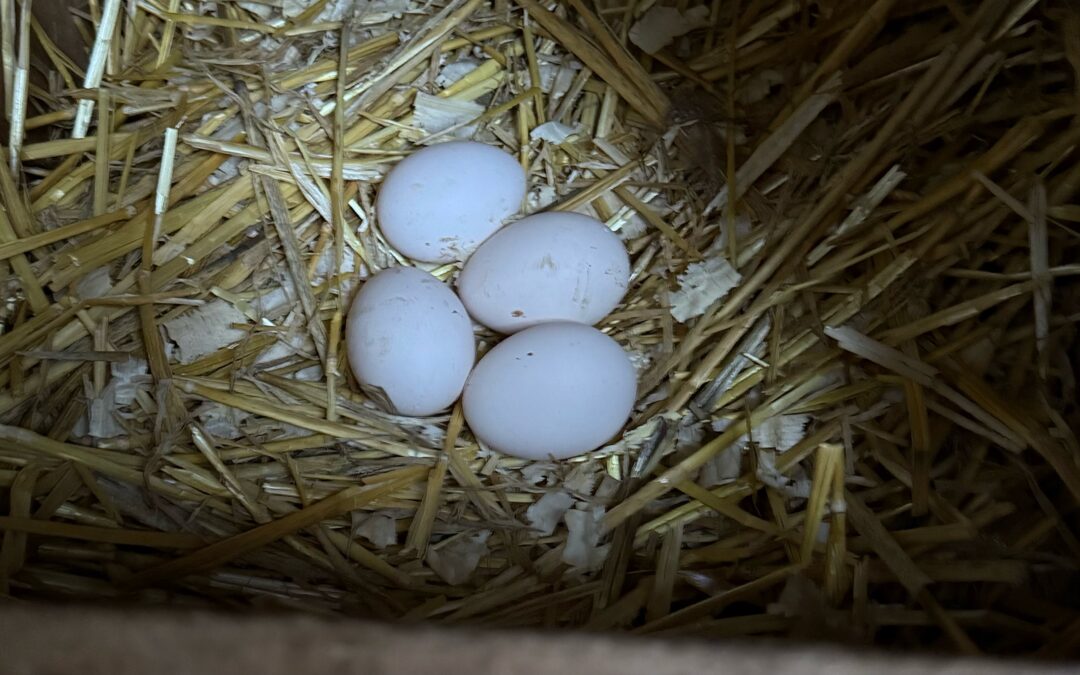
When I finally stepped back, set my emotions aside and looked at the situation, I had to remind myself that this egg drought happens every year. And every year, for some reason right around Winter Solstice, my hens start laying again. So, I waited patiently (OK, not so patiently) for Winter Solstice to arrive, not letting myself make any more changes. And sure enough, on this year’s Winter Solstice, I found one egg in the nesting box.

As it turned out, all the stress, frustration and questioning my skills wasn’t necessary. All I needed to do was think back on previous years and remember that my hens are in their own production schedule. And their production schedule is different from other flocks.

How many of us have found ourselves in similar situations in our businesses? Sales take a dip? The production process has shifted? Our focus isn’t as sharp? Instead of accepting the season and making the most of it, we panic. We start to change processes, or restructure the organization, which only increases stress levels in the people around us.

A better approach may be to slow down and ask, What has changed? Is something really wrong, or is this just the normal fluctuation in my business?

2025 was a challenging year for many of my clients. There was a lot of uncertainty around the economy, which stunted hiring, curbed investment in the business, and in some cases added unnecessary stress for employees. How many leaders, including myself, slowed down and took an objective view of the situation? Is it really necessary to change the way we operate? Or should we just stay the course, strengthen our internal processes and ride this out?

The way to combat challenges in the business is not to add more chaos and start making changes to the organization and its priorities. Instead, I’d encourage you to take a step back and think about the situation in front of you. Has something really changed, or are you just experiencing the normal ebb and flow of the business? Is there something that can be addressed internally that can provide confidence that you are doing the right things to address this external situation? Once you’ve looked at the situation with a clear eye, if you still feel that a course correction is needed, then bring your thoughts to the leadership team so you can all get aligned on priorities and make sure everyone knows their role in executing on those priorities. I know, even from my own experience, that not jumping into action in a perceived crisis takes discipline. But running around and keeping busy may not be the answer, either.

The conversation I had with a client at the end of 2025 captured what I aim to help my other clients accomplish. This client recognized his firm’s difficulty with growth in 2025, but then he said, “Even with all that, I wouldn’t change any of my activities around sales and marketing. I’m confident they are the right things to focus on.” That clarity came from slowing down, recognizing where the economy was, understanding the strength of his processes and staying the course.

Do you have that level of confidence when faced with uncertainty in your business? If not, let’s talk. I can help you and your leadership team assess the situation you’re in and decide if you really need to make a change, or if it’s a matter of staying the course through the normal ups and downs of your business.


The Self-Limiting Beliefs of a Chicken Mama

The Self-Limiting Beliefs of a Chicken Mama

How to keep unexamined assumptions from limiting your growth

I inherited my Icelandic chickens from my chicken coach. When she started growing her flock, she ordered some eggs from an Icelandic chicken breeder and incubated them at her home.  When she gave me some of these chickens and my rooster, she told me not to mix them with any other breeds.  While my dream of being a chicken mama had not included limiting myself to Icelandic chickens, I trusted my coach and followed her instructions. 

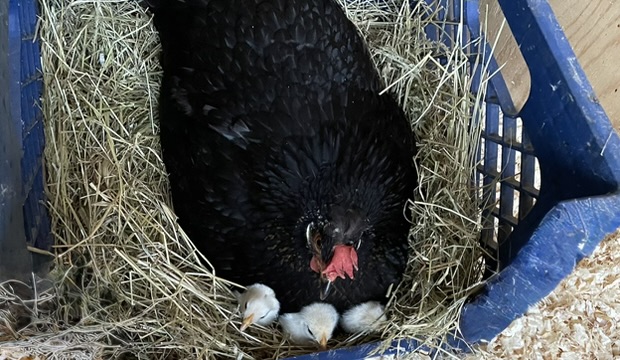
Now, I will say that I’ve been happy with my Icelandic chickens: they are hardy enough to survive our brief, but sometimes intense winter storms, and their hens are known to go broody, making it easy and cheap to grow my flock. 

But, in recent years, as my broody hens haven’t been producing enough peeps to augment my flock, I have started to consider expanding another way: by adding some different types of chickens. 

This has me reconsidering my whole philosophy of owning hens.  If I’m going to get different types of chickens, should I still have a rooster? Why did I get a rooster in the first place? What happens if I have a rooster and various types of chickens? Will I lose my pure Icelandic breed?  Does that even matter? 

I started to wonder if the guidelines I’d been following when I first started down my chicken mama path might not be serving me anymore.

Like many of us, I’ll sometimes keep moving—making decisions based on a familiar set of beliefs—without ever stopping to ask whether those beliefs are actually helping me… or quietly limiting me.

Now, I know: my decision about keeping a rooster or trying a new type of chicken isn’t exactly life-altering. But the pattern is real. When I look back over my life, I can clearly see moments where I made truly significant decisions while operating under a set of beliefs I never questioned. In hindsight, had I paused long enough to examine those beliefs, the outcome might have been different. Sometimes it might have been better.

That’s the tricky thing about self-limiting beliefs. The biggest challenge isn’t fighting them—it’s not even knowing where they are, even as we unknowingly use them to make decisions. As I learned from Anthony de Mello, awareness has to come before action. You can’t change what you don’t see.

That realization led me to put together the list below—practical ways to help identify self-limiting beliefs before they quietly take the wheel. Here are some clues to listen for and questions to ask yourself as you work to discover your own self-limiting beliefs:

1. Over-Explaining

If you find yourself justifying a decision before anyone asked…

  • “I would do this, but…”
  • “Now might not be the right time because…”

👉 Over-explaining is often a belief in disguise: I need permission before I’m allowed to choose this.

2. Chronic “Not Yet.”

Self-limiting beliefs love delay.

  • “After things settle down…”
  • “Once I feel more confident…”
  • “When the timing is better…”

👉 Ask: What am I waiting to feel certain about—and is certainty actually required?

3. Over-Preparing

Preparation can quietly become protection.

  • Endless research
  • One more plan, one more outline, one more scenario
  • Feeling “almost ready” for a very long time

👉 Ask: Am I preparing to succeed—or preparing to avoid risk?

4. Strong Emotional Reactions

Big reactions often point to unexamined beliefs.

  • Defensiveness
  • Frustration that feels disproportionate
  • Immediate shutdown or withdrawal
  • Feeling “called out” by neutral feedback

👉 Strong emotion ≠ weakness: It’s often a signal that a belief just got poked.

5. Comparison Triggers

Comparison isn’t the problem—the meaning we assign to it is.

  • “They’re just more confident than I am.”
  • “That works for them, not for someone like me.”
  • “They’re further along, so why bother?”

👉 Ask: What am I making their success mean about me?

6. “Same Result, Different Year” Pattern

If outcomes keep repeating, beliefs might be driving the bus.

  • Same frustrations
  • Same conversations
  • Same goals that never quite happen

👉 Ask: What belief would have to be true for this pattern to keep repeating?

7. Absolutes and Labels

Beliefs love certainty.

  • “I’m just not good at…”
  • “I’ve never been able to…”
  • “That’s just who I am.”

👉 Replace labels with facts: I haven’t built that skill yet.

8. You Confuse Comfort with Safety

This one shows up a lot in leaders.

  • Choosing what’s familiar over what’s effective
  • Avoiding a conversation to “keep the peace.”
  • Staying busy to avoid thinking

👉 Ask: Is this actually safer—or just more comfortable?

Self-limiting beliefs aren’t loud. They’re familiar. They sound reasonable, responsible, and mature, which is exactly why they’re worth questioning.  If you are up for it, I’d encourage you to take a clarity break to learn what beliefs you are currently holding that are preventing you from growing into the best version of yourself. To help you along, I’ve included a link to a document to get you thinking.

Need help?  Reach out to me! I’d love to share with you how this exercise has affected my life.


Tis the Season!

Tis the Season!

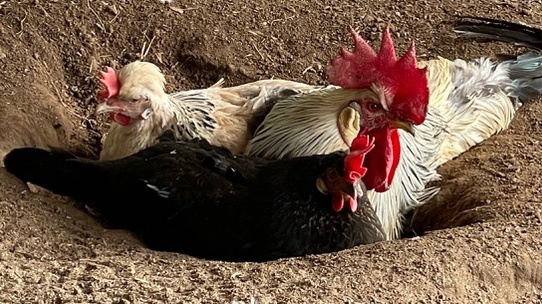
Over the years of raising chickens, I’ve noticed they follow a rhythm that’s oddly reliable. There’s the season of egg abundance, when my hens behave like tiny, feathered overachievers and make me feel like the world’s most competent chicken mama. Then comes “broody season,” when at least one hen decides she’s ready for motherhood (whether I agree or not). And of course, we can’t forget molting season, when feathers fly, egg production crashes, and the hens look like they’re going through their own version of a midlife identity crisis. Conveniently, this happens just before winter, when egg production nearly halts.

Do I wish the egg-abundance season lasted all year? Of course. But nature has opinions, and apparently, she insists on balance. The only way the hens can deliver those glorious baskets of eggs is if they have a season to rest, reset, and rebuild. As much as I’d love to negotiate with biology… that meeting is not getting booked.

And if chickens go through seasons, it only makes sense that humans do too. The difference is: chickens don’t fight it. I, on the other hand, have been known to resist the “rest” season like a toddler being told it’s bedtime. I prefer to push, to solve, to move forward — even when life is whispering, “Slow down, friend.” But sometimes, the bravest thing we can do is admit what season we’re actually in and honor it. Even when it feels inconvenient. Even when it’s hard. Even when it is painful.

Right now, the days are short, and if you’re here in the Pacific Northwest, the sunshine has packed up and left us with a long stretch of gray. Everything in nature is exhaling… settling… quieting. This is the season of rest.

And here’s what I know deep in my bones: my best ideas never show up when I’m running at full tilt. They arrive in the quiet moments — when I pause long enough to hear myself think, when I create space for reflection, when I simply let myself be human. Spring will come, and it will ask something of us. It will require energy, creativity, and commitment. And to show up for that season well, we have to build our reserves now.

So, as you navigate this time of year, will you give yourself permission to rest? To breathe? To reflect on what you want and where you are going? Just as my hens take this winter lull to prepare for their next season of joyous egg production, I hope you use this time to prepare for your own season of joyful, purposeful productivity.

You deserve that reset. You’ve earned it. And your spring self will thank you.

Need help crafting what that rest looks like? Want to gain more clarity for the upcoming year? Please reach out to me, and I will share the valuable tool I have used for the past few years.