
Another Attempt at Raising Chickens

Another Attempt at Raising Chickens

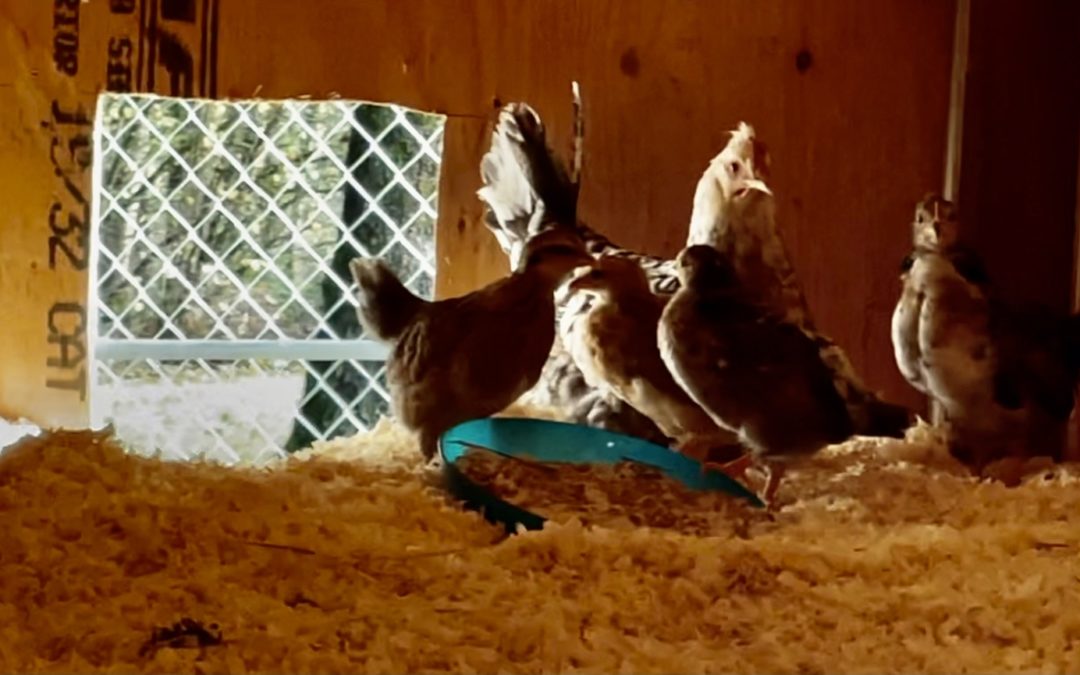
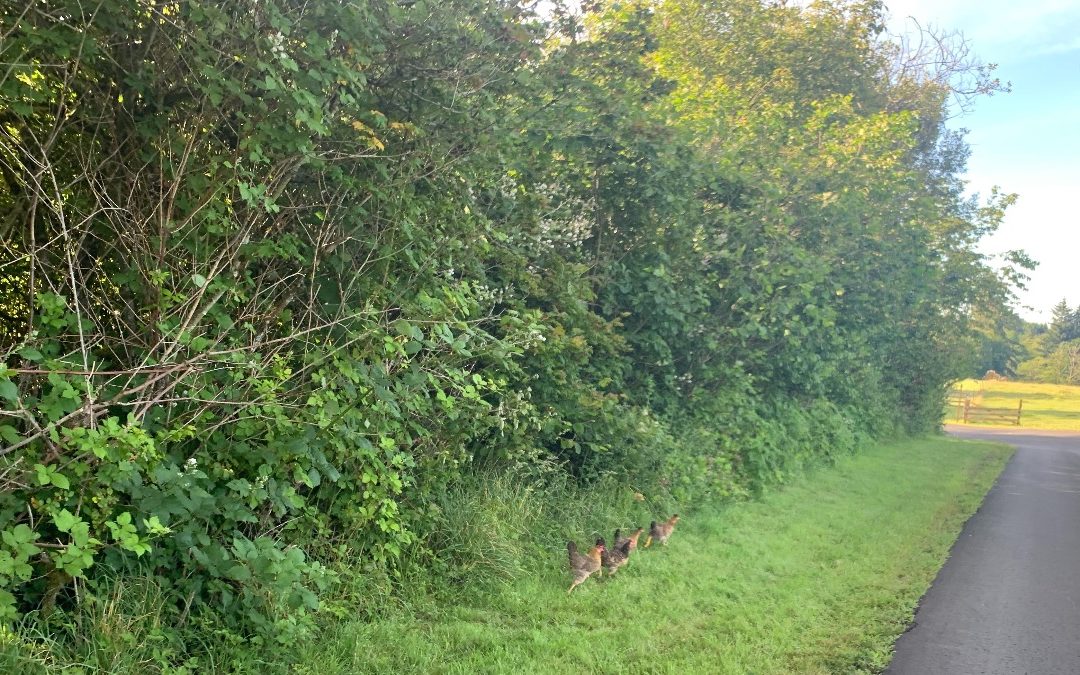
Over Thanksgiving weekend, I received one hen and four 5-week-old chicks.  We put them in the run (which has been secured to keep the chickens from flying out), and the chicks immediately escaped the run through the chain link fence.  As we ran around the field trying to get the chicks back, I really considered giving up on this whole chicken mama thing.  But with some patience, we were able to get all the chicks and the hen back in the coop.  Then I added chicken wire to the chain link fencing.  

It has been fun to actually see chickens living in my coop.

As my husband pointed out, this (1 day) is the longest any chicken has resided in my coop or run.  Once they get settled in, we will add some more laying chickens and a rooster for safekeeping.  According to my chicken coach, the one remaining chicken who hangs out with my neighbor’s horses and goats may return once she hears the cackle of the rooster. 
 
I’ve really tried not to repeat any of the mistakes I made last time, so that I can finally enjoy having chickens and fresh eggs.  And it has been helpful to review the advice from readers of my earlier posts, read more chicken books and seek out additional knowledge.  While success with the chickens isn’t life or death for me, it is something that I would really like to accomplish.
 
Similarly, I know that many business owners would like to be successful in the ever-changing world of COVID —except in this case, it is life or death.  Businesses are struggling to keep their employees safe and protect the customers while continuing to operate and be profitable.  Many companies, especially manufacturers, have had to start and stop production when they have had COVID cases within the workforce.  One local company has had to stop shipping product for at least one day every two weeks for the past two months.  That is a lot of lost revenue and increased labor costs.  
 
In order to stay on top of all the changes, businesses need to anticipate issues and take proactive steps in order to avoid shutdowns, production delays and customer shortages.  But it is hard to be proactive when you feel you can’t do anything but react.  If the leadership team is clear on the direction of the organization and the path to get there, though, they can prioritize the issues and take steps to resolve them. 
 
If you feel that your organization has become more reactive and less proactive, you can take steps now to regain control. It may feel like you don’t have time, but if you don’t do something different, the reactive cycle will continue to repeat.    
 
The great news is that I can introduce you to some tools that can help you put yourself back in the driver’s seat.  Let’s talk today and I’ll help you regain control over your business.

The Big Chicken Experiment

The Big Chicken Experiment

I saw my former chicken yesterday. She was hanging out with my neighbor’s goats and horses. Seeing her made me reminisce about the times when she would come lay eggs in my beautiful chicken coop. Oh, those were the good ol’ days. 
 
So, those of you who are wondering – it’s true, I have no chickens left. Of the five I started out with, only one is still alive and she has left me for greener pastures. I haven’t found a single egg in any of my nesting boxes since late July. I have no idea what happened, but I went from getting 11 eggs in one week to getting none.

Where did I go wrong?

A question I’ve asked myself frequently over the past five months. I think what happened is that I was so caught up in building my coop that I failed to consider some important details that would have made things much easier and more fruitful. 
 
One of those important details is that chickens can fly, and if you don’t want them to leave, you have to either clip their wings or make it so they can’t fly the coop.
 
I guess you could say that my first try at being a chicken mama was a failure. 
 
I’ve spent a lot of time thinking about this and have decided I need a chicken coach. Think about it: athletes have coaches, business owners have coaches, why shouldn’t an aspiring chicken mama have a coach?
 
Most people are afraid to admit that they need an outside perspective in order to achieve their goals. While many will eventually reach their goals, working with a coach helps achieve those goals faster.
 
That is one of the things I enjoy about working with my clients. I help them reach their goals faster. Whether your goal is to grow your business, work less, make more money, or have more fun at work – I can help you. 
 
You can’t coach yourself from within. Or, in my case, you can’t coach yourself from inside the chicken coop. 
 
If you are trying to reach your business or personal goals, I’d love to help you reach them faster and maybe have a little fun along the way. 
 
I’m ready to achieve my chicken goals. Are you ready to achieve your goals? 
 
If so, let’s find some time to connect. 

Better Than the Pecking Order?

Better Than the Pecking Order?

Did you know that chickens can follow a pecking order 136 chickens long?

What that means is, through a series of skirmishes (some more violent than others), chickens establish their own governing body within their clan. The strongest chicken, typically a rooster, is in charge. He gets the food and water first and all the other perks that come from being “Top Dog” or the “Big Cheese.” But that position also comes with the responsibility of leading the flock to safety when a predator comes by and tucking everyone in before nightfall

The clients I work with typically embrace the responsibility of being at the top of the pecking order. They care about their employees, take steps to ensure their safety, and give them opportunities to grow and try new experiences. The biggest challenge they typically face is balancing competing priorities, including growing the business, managing the finances, developing employees, and caring for themselves and their families. What we know is that this can’t be done alone. Having a strong, focused leadership team is the key to a thriving business. The good news is that getting your team moving toward a common vision is much easier than it seems.

As most of you know, I love process.

I’ve put my chemical engineering degree to work by focusing on process engineering. I’ve spent my whole career helping businesses improve by streamlining their processes, from manufacturing to sales to engineering. I love process so much, I even made it part of my company name.

So, when I discovered the business operating system EOS (Entrepreneurial Operating System), I realized this was the perfect tool for me to help my clients get what they wanted from their businesses. If you are ready to implement a system that will lead to higher profits, less friction, and more enjoyment, let’s find some time to talk. Together we can create something better than a pecking order.

Are Your Employees Free Range?

Are Your Employees Free Range?

For the past few weeks, l’ve been writing about employee engagement. Although employee engagement has been on the rise for the past few years, 35% engagement isn’t a number that we should consider success. My last article described a company that judged productivity in terms of availability. While that may make sense for some companies, I’d urge you to find a more compelling measurement for yours.

Not surprisingly, this conversation brought me back to my chickens. Yes, I still have chickens — but I’m not sure how many. As you may recall, after spending the month of April building a beautiful coop for them, we inherited five chickens from a friend. On day one, I learned that chickens can fly much better than I realized. They flew the coop.

They are now free to range wherever they want and will occasionally come back to the coop for food or to lay an egg. I have learned that the Easter egg hunt was born out of the need to find where the hens had chosen to lay their eggs, outside of the established nesting box or boxes.

So, what do chickens and eggs have to do with employee engagement? Read on, my fellow readers.

The purpose of my having chickens is for eggs. Of course, it would be easier for me if I made them stay in their enclosure all day. I’d be able to harvest all my eggs and ensure the hens were safe from predators. However, the eggs wouldn’t be as healthy as when the chickens are free-range.

So there’s a trade-off. If I want them to be free-range, I have to give up control over them. I worry about their safety, and I don’t get to collect all the eggs they are laying. But they forage for berries, bugs, and who knows what else, which produces healthier eggs for me to enjoy.

Giving up control over how our employees do their work can be uncomfortable. But it also gives them the freedom to explore and grow, and they may produce a higher-quality product.

I was listening to a podcast that referenced “The Impact Filter” (Dan Sullivan, The Strategic Coach). This filter provides managers with a tool that outlines an idea, project, or goal and provides the structure to be clear on the purpose, importance, and outcomes before delegating the work to another person. If both parties are clear on those items, the manager is able to delegate the project, and the employee can find the best way to get it done. But if the manager hasn’t done the work up front, he may feel the need to micromanage, or Monday-morning quarterback, neither of which will result in an empowered employee.

So, I challenge you to be clear on what you want your employees to accomplish and let them be free to create the desired outcome. This will lead to engaged and empowered employees.

If you find yourself unsure of how to empower your employees, I can teach you a proven process that will allow you to get the most out of your business.

Is Boring Beautiful?

Is Boring Beautiful?

If you have ever been to Hawaii, you know that everyone (at least those of us on vacation) makes time to watch the sunset. As the sun begins falling, people start making their way to the beach. During our honeymoon over 15 year ago, my husband and I witnessed people blowing into conch shells in honor of the sunset.  

A few years ago, I read that the most beautiful things in life are boring. I remember being very disturbed by that comment. But, upon further reflection, I have to concede it is true. Think about what you consider beautiful in life: a sunset, the mountains, friendships, or even a healthy marriage.

Our lives have been completely transformed since Covid-19. I have spent less time traveling, less time with friends, and a whole lot more time at home. I asked my husband when the shelter-in-place started if we would still like each other when this was over. After mulling it over for a few hours, he said yes. (I’m still curious why it took him so long to answer?!)

For most of us, life (pre-Covid) was full of activities and busyness: work, sports, friends, meetings. But I wonder to what end? Were we running from something? Are we afraid of what we might find when we slow down? Think about it: how many of those activities seem to have lost their importance now that we can’t participate in them?

Whatever the answer, we have been forced to slow down and face a slower daily pace.

I believe this has allowed us to find a new rhythm to life. And without all the distractions, we can now find the beauty in it. Yes, most of us have had to face some challenges, including adjusting to work from home, home/remote learning, or even the loss of our jobs or shuttered businesses. But those things don’t stop the rhythm of life. They simply alter it.

The same can be said for our businesses. A successful business settles into a rhythm that produces a consistent outcome on a daily basis. There is nothing exciting about cars rolling off an assembly line, properties being bought or sold, or metal being poured (although I have to say that for me, watching metal being poured never gets boring). The point is that successful companies have figured out how to produce their product in a consistent way. This approach may be contrary to our society’s habits, as we tend to value the output, and not the discipline behind the output.

The same principle applies to successful people. They have figured out what needs to happen on a consistent basis in order to reach their goals. In his book The War of Art, author Steven Pressfield writes that “we have a right only to our labor, not the fruits of our labor.” We just need to show up and do the work. Since the work is different for everyone and every business, you need to identify what your work is, and then do it consistently, every day.      

If you find that your business or personnel aren’t creating the output you desire, I’d love to help you. Together we can instill a rhythm into your daily practices and put you on the path to creating something beautiful.